
English| USD
Suggested for you
More currencies
Choose a language
Madrid's flamenco tablaos offer nightly performances that blend percussive footwork, live guitar, and cante jondo singing into hour-long shows. Most venues open at 18:00 and stage multiple performances through late evening, with arrival thirty minutes before showtime recommended for drink service and seating.
Quick answer
A flamenco show madrid spain runs daily from 18:00 to 23:30, with performances staged throughout the evening at tablaos like Cardamomo on Calle de Echegaray. Standard admission is 34 EUR per person, which includes the one-hour performance and one drink. Arrive twenty to thirty minutes before your chosen showtime to settle in, order your beverage, and claim a table with clear sightlines to the stage.
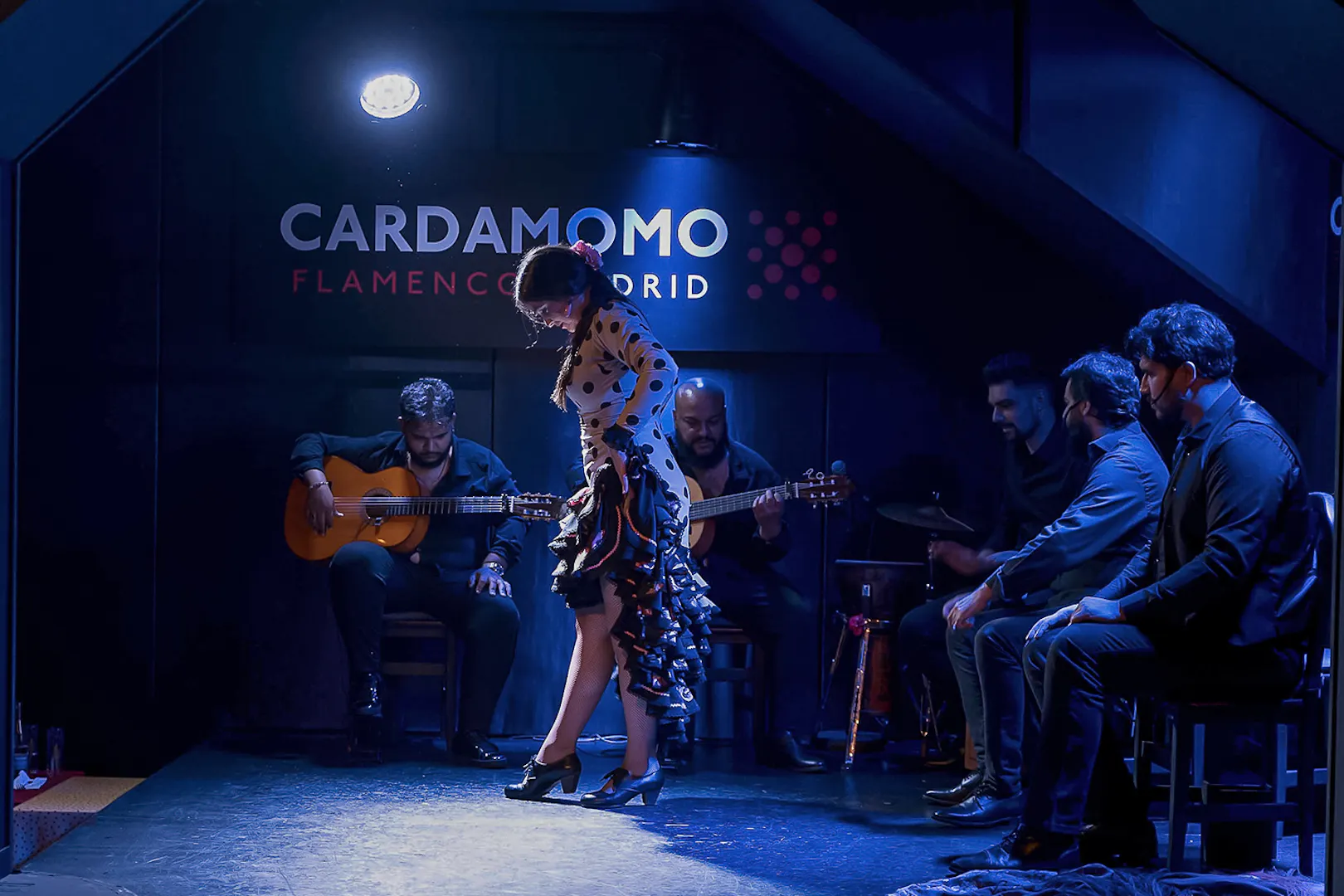
Flamenco emerged in Andalusia but found its second home in Madrid's tablaos—intimate venues where wooden stages amplify the percussive zapateado footwork and audiences sit close enough to see the tension in a dancer's wrists. The city's Centro district has hosted these shows since the 1950s, when venues began formalizing what had been private juergas into ticketed performances for locals and travelers alike. Cardamomo operates on Calle de Echegaray, a narrow street in the Barrio de las Letras where Cervantes once lived. The tablao opens at 18:00 every day and stages performances into the night, each lasting sixty minutes. Shows pair bailaores with live musicians—typically a guitarist, a singer delivering cante, and a palmero clapping polyrhythmic palmas. The format follows a structure of palos, or flamenco styles, moving from the measured soleá to the explosive alegrías, with improvisation woven through each segment. Madrid flamenco differs from Seville's in its cosmopolitan edge. Performers here draw from the Andalusian canon but incorporate contemporary choreography and staging techniques. The audience skews international, so many tablaos provide brief spoken context in English before the music begins. The one-drink minimum keeps the atmosphere social without turning the performance into dinner theater—food is secondary, and the focus remains on the artistry. Booking ahead secures preferred showtimes, especially during spring and autumn when Madrid's cultural calendar peaks. Walk-ins can find seats on slower weeknights, but Friday and Saturday performances fill early. The flamenco show madrid spain experience depends less on the price tier and more on proximity to the stage, where the stomp of heels and the rasp of a singer's voice land with physical force. Budget thirty minutes before curtain to order your drink, review the evening's lineup, and let the ambient guitar warm you into the performance mindset. The art form rewards attention. Flamenco's compás—its rhythmic cycle—can sound chaotic to untrained ears, but even first-time listeners recognize the dialogue between dancer and guitarist, the way a held pause before a footwork burst creates tension. That exchange, honed over decades in Madrid's tablaos, is what separates a competent show from one that lingers in memory.
“Flamenco's compás can sound chaotic to untrained ears, but even first-time listeners recognize the dialogue between dancer and guitarist.”
The venue welcomes guests daily with consistent evening scheduling. These hours provide a reliable framework for planning your visit to a flamenco show in Madrid.
The venue is located at Calle de Echegaray, 15, 28014 Madrid, Spain, situated in the central district near Puerta del Sol. It is most accessible via the extensive Madrid Metro network or by walking from nearby city landmarks.
Line 1, 2, or 3 to Sol station
Lines 6, 26, 32, or 65 to Benavente stop
Direct drop-off at Calle de Echegaray, 15
The best arrival window is 18:00–22:30. Arriving 20-30 minutes before showtime ensures comfortable seating and drink service.
Flamenco's written record begins in 1774, when José Cadalso's Cartas Marruecas named the dance among Andalusian customs. The form grew from Romani, Moorish and Jewish strands in Seville, Jerez and Cádiz. Cante jondo — deep song — came first. Guitar and dance followed. The flamenco show madrid spain audiences watch today descends from that southern inheritance. The café cantante era opened the art to paying rooms. Seville's venues multiplied from 1842, and Silverio Franconetti ran his own from 1881. In 1922 Manuel de Falla and Federico García Lorca convened the Concurso de Cante Jondo in Granada. Their aim was to defend the old palos — soleá, siguiriya, bulerías — against commercial drift. Madrid became the second capital of the form. Villa Rosa began serving flamenco beside Plaza de Santa Ana in 1911. Corral de la Morería opened in 1956, and the tablao displaced the café cantante as the working stage. Cardamomo joined that lineage in 1994, on Calle de Echegaray in the Barrio de las Letras. By then Paco de Lucía and Camarón de la Isla had carried the espectáculo flamenco en Madrid and its repertoire well beyond Spain. UNESCO inscribed flamenco on the Representative List of the Intangible Cultural Heritage of Humanity on 16 November 2010. What survives on site is not architecture but transmission. A cuadro of singer, guitarist and dancers works an arm's length from the tables, palmas marking compás, zapateado struck on a wooden board. A flamenco show madrid spain still rewards attention: the room small, the sound close, the palos the ones Lorca defended.
José Cadalso's Cartas Marruecas carries one of the earliest written references to flamenco among Andalusian customs.
Seville's first cafés cantantes begin programming flamenco for paying audiences.
Silverio Franconetti opens his own café cantante in Seville, professionalising cante jondo.
Villa Rosa starts serving flamenco beside Plaza de Santa Ana, anchoring the art in central Madrid.
Manuel de Falla and Federico García Lorca stage the Concurso de Cante Jondo in Granada to protect the older palos.
Corral de la Morería opens in Madrid, marking the rise of the tablao over the café cantante.
Cardamomo opens at Calle de Echegaray, 15, in the Barrio de las Letras.
UNESCO inscribes flamenco on the Representative List of the Intangible Cultural Heritage of Humanity on 16 November.
Flamenco thrives on unbroken focus between performer and audience. Quiet attention and timely applause honor the art form and the intimate venue.
Prepare for your flamenco evening with these practical steps, ordered by when you should complete them.
Everything you need to know about flamenco show madrid spain
The entrance fee of 34 EUR covers your attendance at the one-hour flamenco show and includes one drink per person. This standard offering is designed to provide a classic experience of the artistic display.
Yes, children are welcome to attend a flamenco show in Madrid, though it is recommended to ensure they are comfortable with the environment of a live tablao. The expressive guitar music and rhythmic dance provide an engaging experience for visitors of all ages.
Each session lasts for one hour, providing a concentrated performance of traditional dance, song, and guitar. You can enjoy the intensity of the artistry within this set duration, which is perfect for an evening itinerary.
To ensure a relaxed experience, you should plan to arrive 20-30 minutes before the scheduled start. The best arrival window is between 18:00 and 22:30 to allow enough time for seating and receiving your drink service.
While this page provides general information and cultural context, you can visit the official site at https://cardamomo.com to manage your booking. Following the link ensures you have the most direct information for your visit.
The venue is located at Calle de Echegaray, 15, and is situated in a central area of the city. As an authentic tablao, it follows local architectural standards to house its performances and guests comfortably.