
English| USD
Suggested for you
More currencies
Choose a language
Not all flamenco performances in Madrid happen in the same type of space. A tablao is a dedicated flamenco venue designed for intimate, traditional shows, while general stages host various performances across genres. The difference shapes everything from seating to artistic integrity.
Quick answer
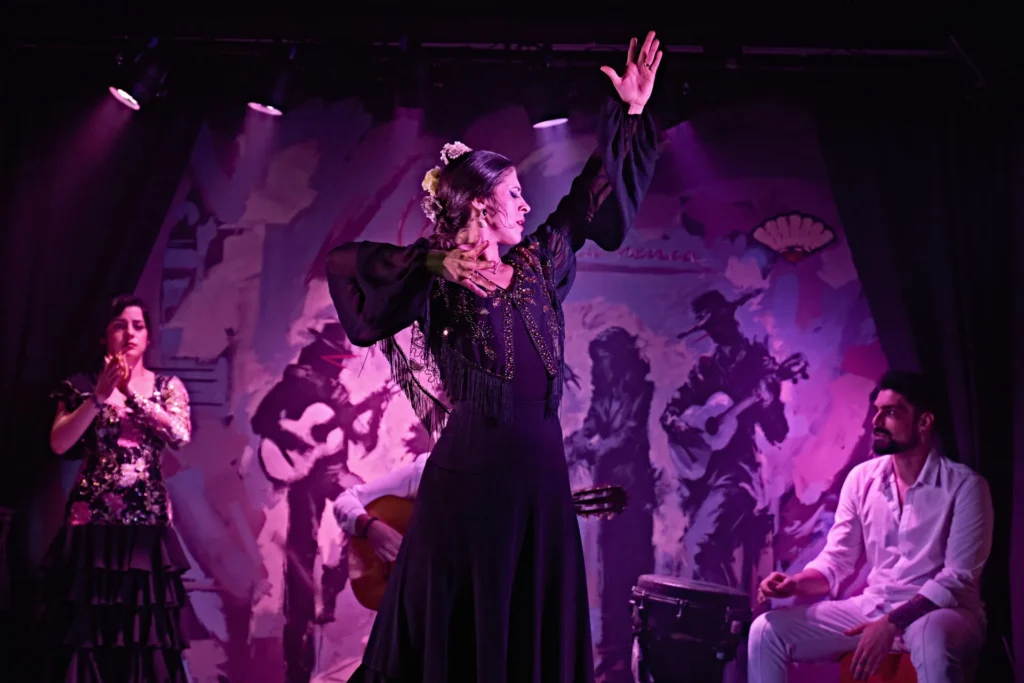
A flamenco show Madrid tablao is a specialized venue where flamenco is performed nightly in an intimate, cabaret-style setting with close proximity to dancers, singers, and guitarists. Unlike general theaters or cultural centers that book flamenco occasionally, tablaos operate exclusively as flamenco houses, maintaining resident companies and preserving the art form's traditional staging conventions.
The word tablao comes from the flamenco term for the wooden platform where performers dance. Historic tablaos emerged in Madrid during the 1950s as dedicated spaces for the art form after centuries of flamenco existing in private gatherings and cafés cantantes. These venues were built around the principle of duende—the raw, emotional connection between artist and audience that requires physical closeness. Authentic Madrid flamenco tablaos operate with specific structural characteristics. The performance space measures small by design, seating typically between 60 and 120 guests at cabaret-style tables arranged around a raised wooden stage. Performers work within arm's reach of the front row. The tablao format includes live guitar, vocalists known as cantaores, palmeros who provide percussive handclaps, and bailaores who execute the footwork and choreography. Shows run in sets, often with two performances per evening, and many tablaos integrate dinner service as part of the traditional experience. Cardamomo, located on Calle de Echegaray, 15, exemplifies this model—a dedicated flamenco house open daily from 18:00 to 23:30 with admission at 39 EUR including a welcome drink. General stages in Madrid—municipal theaters, cultural centers, and multi-use auditoriums—book flamenco as one genre among many. These venues seat audiences in fixed theater rows at a greater distance from performers, eliminating the tablao's signature intimacy. Productions in these spaces often trend toward choreographed spectacle rather than improvisation, a distinction that matters to flamenco purists. The acoustic environment differs as well; tablaos amplify the percussive elements naturally through wooden floors and low ceilings, while theaters require microphones and sound design that can dilute the visceral impact of zapateado footwork. Choosing between a flamenco show Madrid tablao and a theater performance depends on what you value. Tablaos offer proximity, spontaneity, and a setting designed exclusively for flamenco's rhythmic and emotional demands. Theater productions provide polished staging, larger casts, and sometimes lower ticket prices, but sacrifice the closeness that defines the tablao tradition. For visitors seeking the experience flamenco was designed around—where you hear the dancer's breath and feel the floor vibrate—the tablao remains the historically grounded choice.
“The tablao format requires physical closeness between artist and audience, a principle that general theater seating cannot replicate.”
The venue operates daily to accommodate visitors seeking authentic flamenco performances in Madrid. Doors open consistently throughout the week.
The venue is located at Calle de Echegaray, 15, 28014 Madrid, Spain. It is most easily accessed via the central Madrid Metro network or by walking from nearby city landmarks.
Line 1 or 2 to Sol station
Lines 6, 26, 32 to Benavente stop
Direct to Calle de Echegaray, 15
The best arrival window is 18:00–23:00. Arriving 30 minutes early allows for a relaxed seating process before the performance begins.
Understanding the distinction between an authentic tablao and a general stage ensures you experience the raw, unamplified essence of this traditional art form.
Authentic tablaos are intimate venues designed for acoustics where artists perform without microphones, whereas general stages often rely on amplified sound systems in larger, less focused environments. Seek smaller capacities to witness the subtle communication between the dancer and the guitarist known as 'duende'.
Flamenco is a dialogue between performers; maintain silence during the show to allow the artists to concentrate on their complex rhythms and improvisations. Avoid using flash photography, as it disrupts the performers' focus in the low-light setting of a traditional tablao.
You will notice audience members or performers shouting words like 'ole' at specific moments during the music. These are not random cheers but responses to well-executed steps or emotional intensity, signaling genuine appreciation for the artist's craft.
In an authentic tablao, the closeness of the seating allows you to hear the percussive sound of the dancers' footwork against the wooden floorboards. This connection is fundamental to the performance and is lost in venues where the stage is physically distant from the audience.
While performances can be intense, there is no need for applause after every movement; wait for the natural conclusion of the specific palo or song segment. This shows respect for the structure of the performance and the concentration of the musicians.
Everything you need to know about flamenco show madrid tablao
An authentic flamenco show madrid tablao is a venue specifically designed for this art form, often characterized by intimate acoustics and a wooden stage that enhances the sound of percussive footwork. These venues prioritize the interplay between the dancer, singer, and guitarist in a communal, historic setting.
A general stage often places flamenco within a larger theatrical or variety production, whereas a tablao is dedicated exclusively to the intense, raw emotion of flamenco. Tablaos offer a focused environment where the audience sits close to the performers, allowing for a visceral connection to the rhythmic zapateado.
The entrance fee is 39 EUR, which includes admission to the performance and one welcome drink. Please check our booking funnel for official reservation details.
The venue is open daily from 18:00 to 23:30. This schedule allows for consistent access to performances throughout the week.
Arriving 30 minutes early is recommended to ensure a relaxed seating process before the performance begins. Our best arrival window is between 18:00 and 23:00.
Children are generally welcome to experience the cultural heritage of a live performance. We suggest verifying specific age requirements through the official booking portal to ensure a comfortable visit.
You will witness a live display of guitar playing, cante, and baile in an intimate setting. The performance highlights the cultural depth of this Spanish art form without the use of microphones, relying on the natural resonance of the room.